
What Size Removal Van Do I Need? A 1-Bed to 4-Bed Guide
Picking the right size removal van is one of those decisions that feels small but has a real cost if you get it wrong. Too small, and you’re making two or three trips, paying for extra hours, and watching your moving day stretch into the evening. Too big, and you’re paying for empty space and a vehicle that may struggle to get down your road.
The honest answer is that bedroom count is only a rough guide. What actually decides the van size is the volume of everything you own — and two identical three-bedroom houses can hold wildly different amounts of stuff. This guide gives you a quick answer first, then shows you how to get it right for your specific move.
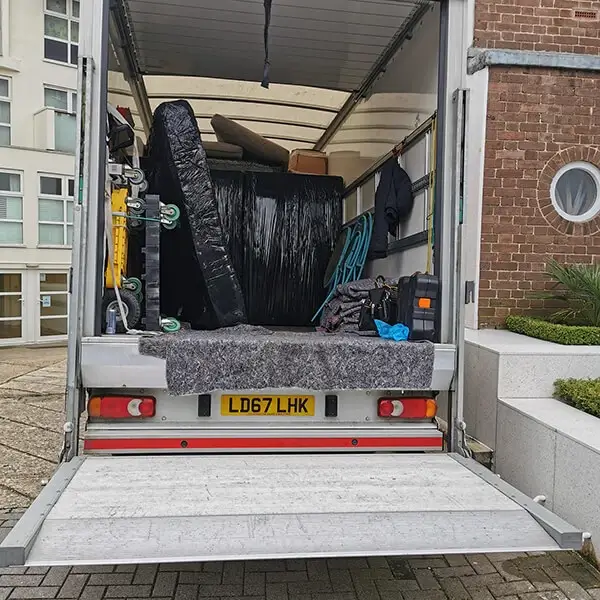
Table of contents
- Why Volume Matters More Than Bedroom Count
- Removal Van and Lorry Sizes Explained
- What Size Van for Each Property Type
- Factors That Change the Van Size You Need
- Hiring a Van Yourself vs Booking a Removal Company
- How to Estimate the Volume of Your Move
- Tips to Make the Most of the Van Space
- Frequently Asked Questions
Why Volume Matters More Than Bedroom Count
Professional removers don’t price or plan a move by counting bedrooms. They estimate it by cubic feet (or cubic metres), because that’s what actually has to fit inside the vehicle.
Understanding Cubic Feet and Cubic Metres
Volume is simply the amount of three-dimensional space your belongings occupy. UK removal companies have traditionally measured it in cubic feet, though cubic metres are increasingly common. As a quick conversion, one cubic metre is roughly 35 cubic feet.
To put the numbers in context, a standard medium moving box holds around 3–4 cubic feet when packed. So 50 boxes is roughly 150–200 cubic feet before you’ve added a single piece of furniture. A typical three-seater sofa is around 40–50 cubic feet, a double bed and mattress around 60–70, and a large wardrobe around 50. Add these up across a whole house and you can see how quickly the total climbs.
The Hidden Volume People Forget
When most people picture their move, they picture the obvious furniture — the sofa, the beds, the dining table. The items that actually catch people out, and push them into the wrong van size, are the ones that aren’t in the main rooms:
- Lofts are the single biggest surprise. A loft full of boxes, suitcases and seasonal items can add the equivalent of an entire extra room.
- Garages and basements often hold tools, paint, bikes, spare furniture and boxes that were “put there to deal with later.”
- Sheds and gardens contain lawnmowers, garden furniture, pots, BBQs and tools that take up far more space than expected.
- White goods and appliances — fridge-freezers, washing machines, dishwashers, tumble dryers — are bulky, heavy and impossible to stack.
- Soft and bulky furnishings — sofas, mattresses, wardrobes and corner units — look manageable but can’t be compressed, so they eat load space fast.
This is why a minimalist couple in a three-bed might move comfortably in a Luton van, while a family that’s filled a two-bed over fifteen years needs a 7.5-tonne lorry. The lesson is simple: count your belongings, not your rooms.
Removal Van and Lorry Sizes Explained
Here’s what each common vehicle can realistically handle, from smallest to largest.
Small Van (Short-Wheelbase)
With roughly 250–350 cubic feet of space, a small short-wheelbase van suits a few items of furniture, a student move, or shifting the contents of a single room. It’s not a realistic choice for a whole-home move, but it’s ideal for a small man and van job, a furniture collection, or moving items into storage.
Long-Wheelbase (LWB) Panel Van
At around 400–500 cubic feet, a long-wheelbase van is a genuine option for a studio or a sparsely furnished one-bedroom flat. It’s popular for first homes and rented properties, where people typically own less. The trade-off is that loading is harder than a Luton because there’s no tail lift, so heavy items have to be lifted up into the load space.
Luton Van With Tail Lift
The Luton van is the workhorse of UK removals, offering roughly 550–700 cubic feet. Its boxy body maximises usable space, and the tail lift makes loading heavy furniture far easier and safer. It comfortably handles a one-bed and most two-bed moves, and for many local moves it’s the default vehicle. One important practical note: some Luton vans are built on a 3.5-tonne chassis (drivable on a standard car licence) while larger ones exceed that — a distinction that matters if you’re hiring one to drive yourself (see the licence section below).
7.5-Tonne Box Lorry
With around 1,000–1,200 cubic feet, the 7.5-tonne lorry is the standard choice for a three-bedroom house. In most cases it can move a full family home in a single trip, which keeps the day efficient and the cost predictable. It’s large enough to be serious, but still compact enough to access most residential streets.
18-Tonne Removal Lorry
The largest vehicle in most removal fleets, an 18-tonne lorry offers roughly 1,600–2,400 cubic feet — enough for a four- or five-bedroom home, or a smaller home with a lot of contents. One vehicle this size will usually clear a large house in a single load, provided it can physically reach the property. Access is the main limitation: narrow lanes, low bridges and tight parking can rule it out even when the volume calls for it.
What Size Van for Each Property Type
Here’s how those vehicles map onto real homes, with the things to watch for in each case.
Studio and One-Bedroom Flats
A long-wheelbase van or a small Luton is normally enough. Lean towards the Luton if the flat is well furnished, if you own large appliances, or if you’d rather load everything in one go. Flats also bring access considerations — stairs, lifts and limited parking can all add time regardless of van size.
Two-Bedroom Homes
A Luton van handles most two-bed moves comfortably. The deciding factor is usually storage space: if you have a packed loft, a full garage or a busy shed, size up to a 7.5-tonne lorry or plan for a second trip. Two-bed houses tend to hold more than two-bed flats simply because they come with additional storage areas.
Three-Bedroom Homes
A 7.5-tonne lorry is the typical choice and will usually do the job in one trip. A large Luton can sometimes cope with a lightly furnished three-bed, but it’s a tighter fit and more likely to need two runs. For a family home that’s been lived in for years, the 7.5-tonne is the safer, more efficient option.
Four-Bedroom Homes and Larger
These usually call for an 18-tonne lorry, or a 7.5-tonne vehicle making two trips. Larger family homes also tend to have more specialist items — pianos, large appliances, extensive garden equipment — that add both volume and handling complexity. For five-bedroom homes and above, two vehicles or a carefully planned multi-trip move is common.
Factors That Change the Van Size You Need
Even when your property type points to a particular vehicle, these factors can move you up — or occasionally down — a size.
Lofts, Garages, Sheds and Gardens
As covered earlier, these are the most common reason a move ends up bigger than expected. If any of these spaces are in active use, assume you’ll need more capacity than the bedroom count suggests.
Large and Specialist Items
Pianos, American-style fridge-freezers, gym equipment, large garden machinery and oversized furniture all take up disproportionate space and may need special handling. Flag these early — they can affect not just the van size but the equipment and crew required.
Access, Parking and Road Restrictions
The biggest van isn’t always the right van. Narrow lanes, low bridges, height-restricted car parks, private estates and tight parking can all rule out a large lorry, even when the volume calls for one. In areas like Weybridge, gated developments, period properties and restricted residential streets sometimes mean a slightly smaller vehicle making two trips is genuinely the more practical choice. It’s always worth checking parking and access at both ends of the move.
One Large Vehicle vs Two Smaller Trips
It’s tempting to book a smaller, cheaper van and “just do two runs,” but the maths often doesn’t favour it. A second trip means extra driving time, more fuel, and another full round of loading and unloading. As a rule of thumb: if your two homes are close together, two trips in a smaller van can occasionally make sense; if they’re more than a few miles apart, a single correctly sized vehicle is almost always cheaper and far less stressful. A move done in one trip is faster, calmer and easier to price accurately.
Hiring a Van Yourself vs Booking a Removal Company
If you’re weighing up a DIY move against a professional service, van sizing is only part of the picture.
What Licence Do You Need to Drive a Larger Van?
This is the detail that catches most DIY movers out. In the UK, a standard car licence (category B) only allows you to drive vehicles up to 3,500 kg (3.5 tonnes) maximum authorised mass. That covers most panel vans and many — but not all — Luton vans.
Anything heavier needs additional entitlement:
- 7.5-tonne lorries require a category C1 licence.
- 18-tonne lorries require a category C licence.
If you passed your driving test before 1 January 1997, you may have a “grandfathered” C1 entitlement that lets you drive up to 7.5 tonnes — but it’s worth checking your licence categories before assuming. The practical takeaway: if your move genuinely needs a 7.5-tonne or 18-tonne vehicle, doing it yourself usually isn’t an option unless you hold the right licence, which is one of the main reasons larger moves are handled by professionals.
The Hidden Work of a DIY Move
A self-hire van is empty space that you have to load efficiently, protect and unload — which is much harder than it looks. Poor loading wastes space (meaning you need a bigger van or more trips), and unprotected furniture is far more likely to be damaged in transit. You’ll also need your own blankets, straps and trolleys, and the muscle to move everything safely.
What a Professional Service Handles for You
Book a professional Weybridge house removals service and sizing stops being your problem entirely. Our experienced surveyor will calculate the volume for you, allocate the right vehicle and the right number of movers, and plan the load so everything fits — which is exactly what stops a move from overrunning. The vehicle also arrives fully equipped with protective materials, so your belongings are wrapped and secured rather than simply stacked. If your dates don’t line up, many firms can also combine the move with short-term storage, so you’re not forced to fit everything into one journey.
How to Estimate the Volume of Your Move
You don’t need a precise figure, but a rough estimate helps you choose the right size with confidence.
A Simple Room-by-Room Method
- Walk through every room — and crucially, include the loft, garage, shed and garden.
- Note the large items in each space (sofas, beds, wardrobes, appliances, tables, desks).
- Estimate how many standard moving boxes each room will fill.
- Make a note of anything bulky or awkward that will need special handling.
A Rough Box-and-Furniture Calculation
As a very rough guide, a packed standard moving box is around 3–4 cubic feet. So:
- 40 boxes ≈ 120–160 cubic feet
- A three-seater sofa ≈ 40–50 cubic feet
- A double bed and mattress ≈ 60–70 cubic feet
- A large wardrobe ≈ 50 cubic feet
Add your boxes and furniture together, then compare the total against the sizing table near the top of this guide. If you land near the upper end of a size band, round up rather than down — running out of space mid-move is far more costly than a little spare room.
When to Book a Survey
For anything larger than a one- or two-bed flat, or any move with tricky access or specialist items, a short survey is worth it. A quick video walkthrough or in-person visit lets a remover assess the true volume, spot access problems while there’s still time to plan around them, and allocate the right vehicle and crew. It’s the most reliable way to avoid moving-day surprises.
Tips to Make the Most of the Van Space
Whichever size you choose, loading well can be the difference between one trip and two:
- Disassemble large furniture — beds, wardrobes and tables take up far less room flat-packed, and reassembly is quicker than a second trip.
- Load heavy and large items first, against the cab end, to create a stable base.
- Fill gaps with soft items like bedding and cushions rather than leaving air pockets.
- Stack boxes by weight, heaviest at the bottom, and keep box sizes consistent so they stack squarely.
- Use vertical space — a well-loaded van is packed to the roof, not just across the floor.
Frequently Asked Questions
How Many Parking Spaces Do I Need to Reserve for a Luton Van?
A Luton van is around 6.5 to 7 metres long, so as a rule you’ll want the equivalent of about two car parking spaces, ideally with a little extra room at the rear for the tail lift to operate and for the crew to move around safely. The closer the van can park to your door, the quicker and easier the move — long carries from a distant space add time. If you’re on a residents’ permit street or a controlled parking zone, contact your local council in advance, as you may be able to apply for a parking bay suspension or dispensation to keep the space clear on moving day.
Will the Volume Be Less if the Furniture Is Flat-Packed?
Yes, and often significantly. Dismantling beds, wardrobes, tables and shelving removes the air gaps that bulky assembled furniture creates, so the pieces lie flat, stack neatly and take up far less load space. Flat-packing can be the difference between needing one van size or the next one up, and between one trip and two. The trade-offs are the time it takes to dismantle and reassemble, and the fact that some older or chipboard flat-pack furniture doesn’t always survive being taken apart and rebuilt — so it’s worth weighing up item by item.
What Is the Standard Height of a Removal Van?
It depends on the vehicle, and there are two heights worth knowing. A Luton van is typically around 3 to 3.3 metres in external height, with an internal load height of roughly 2.1 metres; a 7.5-tonne lorry is a little taller again. The external height matters most for access — many multi-storey and underground car parks have height barriers around 2 metres, which will exclude almost any removal van, and low bridges or overhanging trees can be an issue on some routes. If your property has restricted overhead access, mention it when booking so the right vehicle and route can be planned.
Do You Load the Removal Van Full?
We load the van to make the most of the available space — packing items floor to roof and filling gaps so your belongings travel securely and your move is completed in as few trips as possible. That said, a good load isn’t just about filling space; it’s about distributing weight correctly, protecting fragile items and staying within the vehicle’s legal weight limit. Occasionally a van reaches its safe weight limit before it’s physically full, particularly with very heavy items, which is another reason matching the right vehicle to your move matters.
Get the Right Van for Your Move
Sizing a move by guesswork is where moving-day surprises come from. If you’d rather have it worked out for you, we can estimate the volume of your move and recommend the right vehicle and crew — with no obligation.
Let us handle the sizing so you don’t have to.